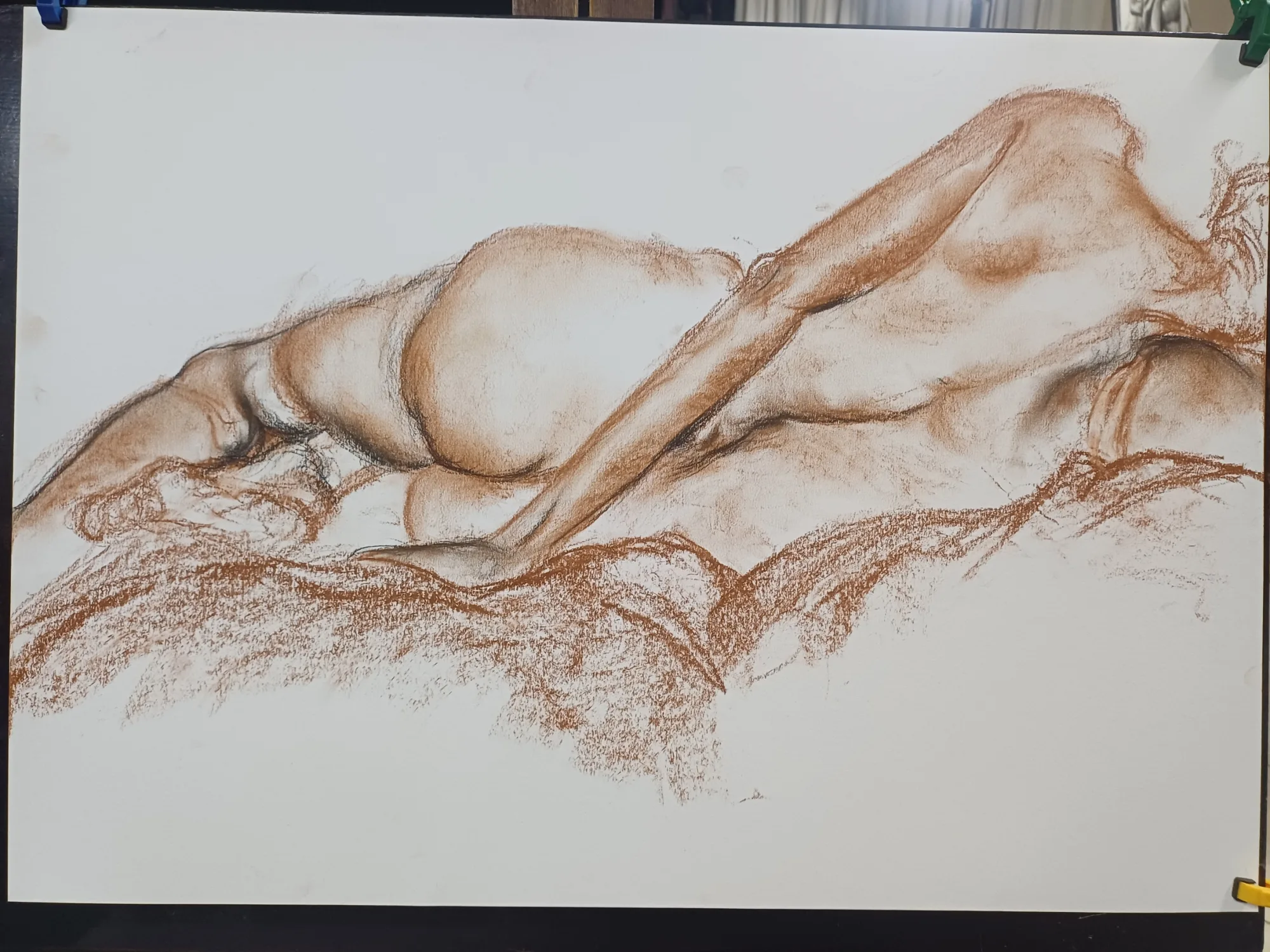
A reclining figure viewed from behind, drawn in warm sanguine on a large sheet. The hour shows in the layering — the back and hips are built with confident, sweeping strokes that return and return, the red chalk tracking the body's curves with a thoroughness that shorter poses don't allow. The legs extend into the composition with real weight. The fabric beneath the figure gets its own attention: softer, denser marks that give the body something to rest against, a surface that isn't just background but part of the drawing's structure.
The sanguine itself is doing something specific here that a different medium wouldn't. The red chalk has a warmth that is literal — the colour temperature sits somewhere between skin and earth — and it has a softness that comes from the way it catches the paper's tooth in the broader strokes. Where the chalk is pressed harder, at the hip and along the lower back, the red deepens and concentrates. Where it's lighter, across the upper back and the legs, the paper's white shows through and the figure seems to open out. The tonal range isn't built through layered hatching the way the charcoal work was; it's built through pressure, through the relationship between the hand's weight on the chalk and the texture of the surface underneath.
Seen alongside the dense charcoal work from the 20-minute pose — with its accumulated cross-hatching and its commitment to darkness — the shift to this medium and this viewpoint is striking. It's not just a change of material; it's a change of register. From shadow to sanguine. From the front of the body to the back. From building through darkness to building through the chalk's own colour. The same hour that could have been spent pushing charcoal further was instead given to something wholly other, and the drawing is warmer for it — literally and in the quality of its looking.
Comments (1)
The sanguine itself is doing something specific here that a different medium wouldn't. The red chalk has a warmth that is literal — the colour temperature sits somewhere between skin and earth — and it has a softness that comes from the way it catches the paper's tooth in the broader strokes. Where the chalk is pressed harder, at the hip and along the lower back, the red deepens and concentrates. Where it's lighter, across the upper back and the legs, the paper's white shows through and the figure seems to open out. The tonal range isn't built through layered hatching the way the charcoal work was; it's built through pressure, through the relationship between the hand's weight on the chalk and the texture of the surface underneath.
Seen alongside the dense charcoal work from the 20-minute pose — with its accumulated cross-hatching and its commitment to darkness — the shift to this medium and this viewpoint is striking. It's not just a change of material; it's a change of register. From shadow to sanguine. From the front of the body to the back. From building through darkness to building through the chalk's own colour. The same hour that could have been spent pushing charcoal further was instead given to something wholly other, and the drawing is warmer for it — literally and in the quality of its looking.
Register or sign in to leave a comment.