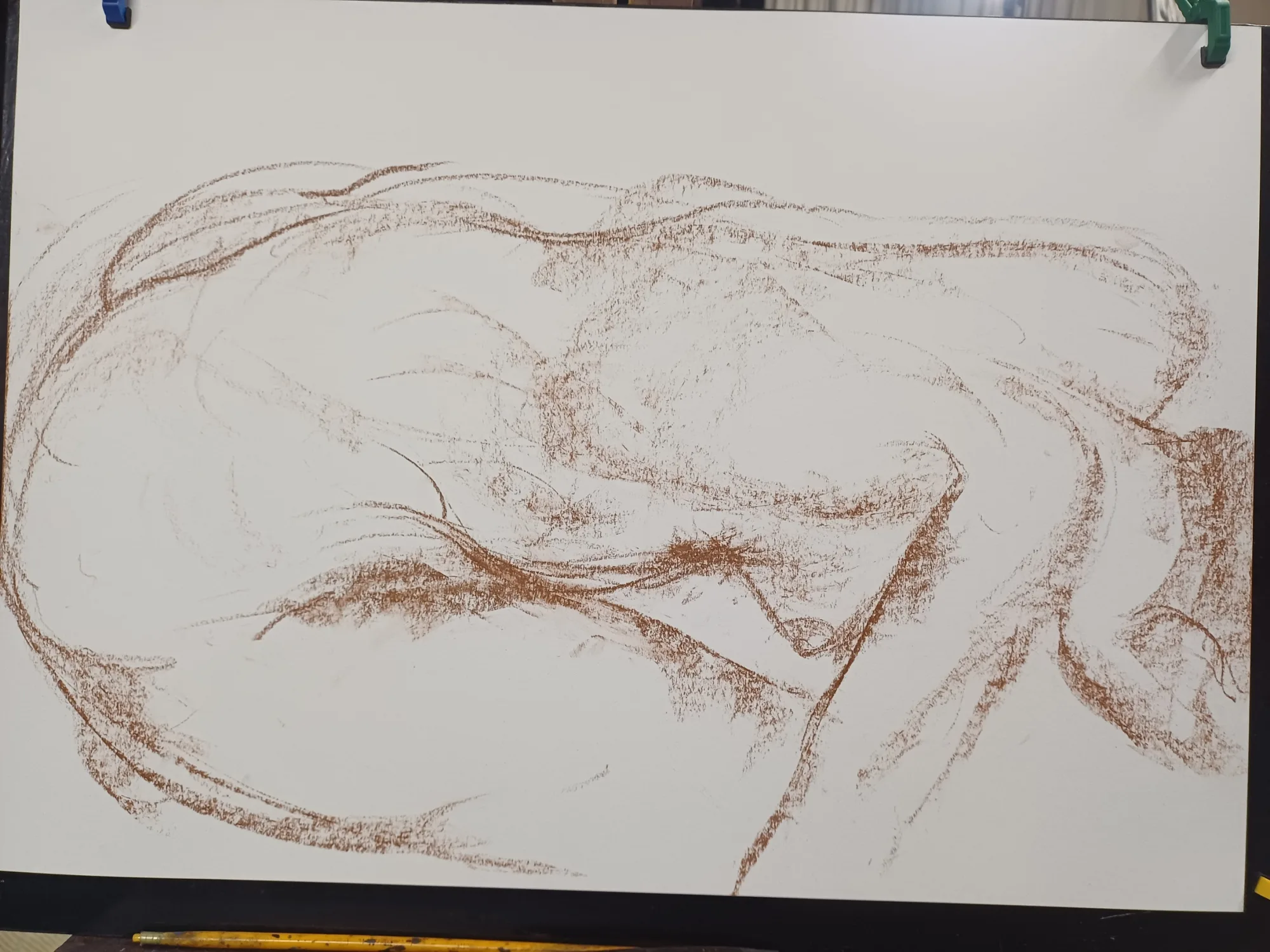
A reclining figure in red chalk, carrying more weight than its companion drawings in this sanguine series. The marks along the spine and waist press harder into the paper, building a concentration of tone that gives the centre of the figure a solidity the extremities don't share. The body curves through the sheet — there's a sense of continuous arc from the shoulders down through the torso and into the hips that the lighter drawings in the series only implied.
The sanguine is still open at the edges. The arms and lower legs thin to light marks and suggestion, and the paper is visible through most of the drawing's surface. But where the chalk does commit — along that central axis of the spine, at the waist, in the crease where the torso meets the hip — the marks are confident and layered. The red deepens there in a way that creates an organic hierarchy: the core of the body is the core of the drawing, and attention radiates outward from it.
The warmth of the medium does something here that harder materials couldn't easily achieve. The sanguine's colour temperature — that particular red-brown that sits between skin and earth — and the softness of the way it deposits on the paper give the marks an intimacy that graphite or charcoal don't carry in the same way. The body isn't being observed from a distance in this drawing. The marks feel close, as if the hand that made them was attending not to the figure's outline or its proportions but to the specific way it settled into the pose — the weight, the warmth, the curve of it.
Comments (1)
The sanguine is still open at the edges. The arms and lower legs thin to light marks and suggestion, and the paper is visible through most of the drawing's surface. But where the chalk does commit — along that central axis of the spine, at the waist, in the crease where the torso meets the hip — the marks are confident and layered. The red deepens there in a way that creates an organic hierarchy: the core of the body is the core of the drawing, and attention radiates outward from it.
The warmth of the medium does something here that harder materials couldn't easily achieve. The sanguine's colour temperature — that particular red-brown that sits between skin and earth — and the softness of the way it deposits on the paper give the marks an intimacy that graphite or charcoal don't carry in the same way. The body isn't being observed from a distance in this drawing. The marks feel close, as if the hand that made them was attending not to the figure's outline or its proportions but to the specific way it settled into the pose — the weight, the warmth, the curve of it.
Register or sign in to leave a comment.